14 September 2026 · Forma editorial concept
Light as a material
Light makes a room understandable through edges, surfaces and the places where it changes. A concept study can examine those relationships before treating daylight as an effect added to a finished image.
Begin with what the light reveals
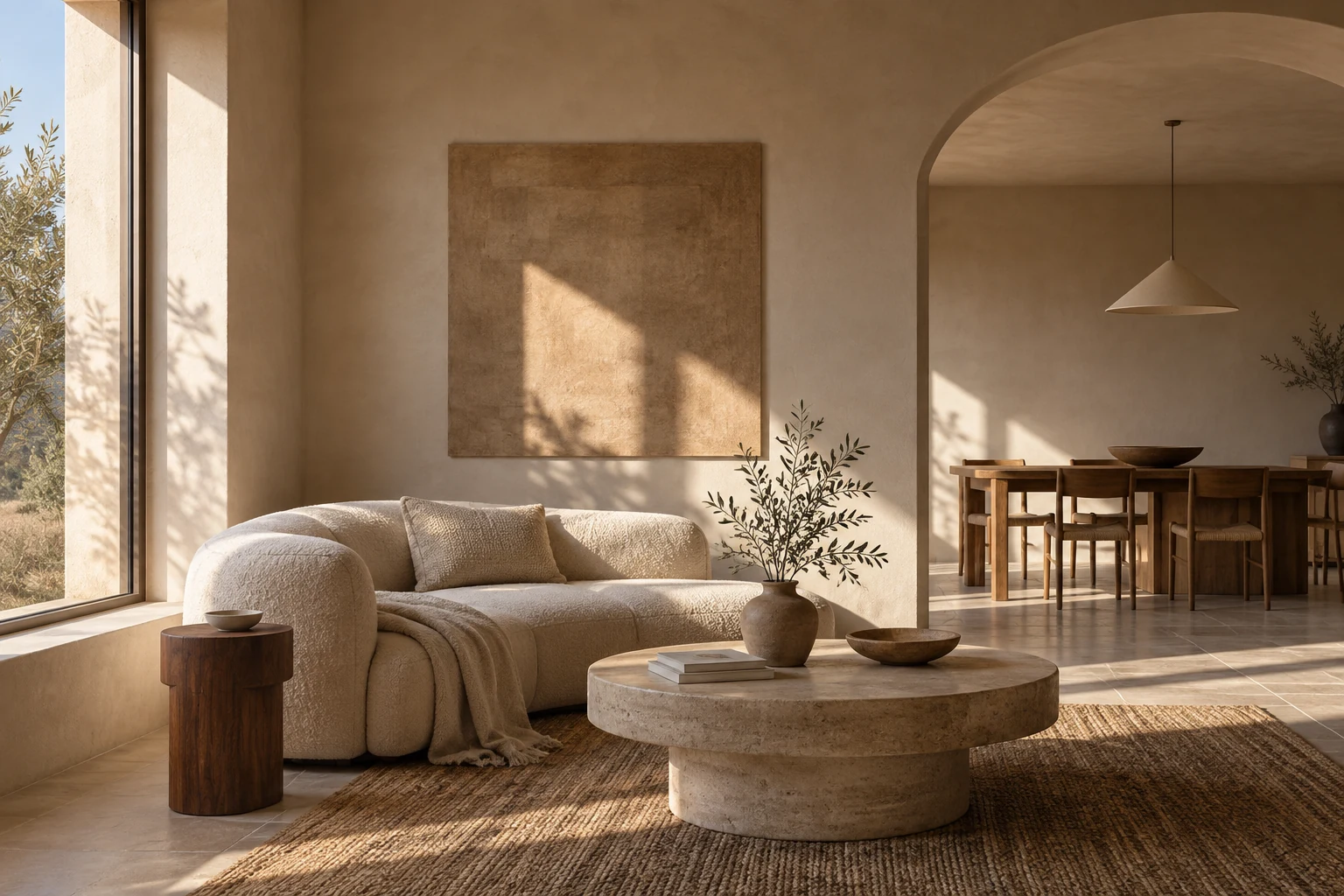
In an architectural image, light can easily become the subject of the image itself. A bright beam crosses a wall, a long shadow reaches across a floor, and the scene feels complete. Yet the more useful question for a spatial concept is what that light helps us understand. Does it reveal the depth of an opening? Does it distinguish a sheltered edge from an open courtyard? Can we still read the texture and colour of the materials?
Forma's concept imagery begins with these questions. The aim is not to make every room dramatic. It is to make each room legible. Soft daylight allows the relationship between plaster, timber and stone to remain visible without turning the window into a blank white rectangle. It also helps separate decisions about space from decisions about photographic spectacle.
Look at the edge of the opening
A window is more than a bright shape on a wall. Its position, depth and frame establish a relationship between inside and outside. In Courtyard House, the opening toward the central garden gives the living room a particular orientation. The viewer should understand where the room ends, where the sheltered edge begins and where the open courtyard lies beyond it.
The frame matters because it makes this sequence visible. A teak profile against cream plaster introduces an edge at the scale of a hand. The grey stone floor continues beneath it as a different kind of reference. Light allows these materials to be distinguished, but it should not erase the junction between them. The concept image is stronger when the opening can be read as part of the room rather than a portal into an unrelated scene.
Compare different positions in the same room
One view rarely explains a room completely. Looking toward a courtyard from a sofa is different from approaching it along a passage. A detail view of a reveal tells another part of the story. These positions should belong to the same lighting situation, even though the amount of visible sky or surrounding wall changes.
When producing a sequence, consistency becomes a useful discipline. If the first image suggests overcast daylight, a second image with a low golden sun can make the building difficult to understand. The change may be visually appealing but can obscure the relationship between the views. For this concept, keeping the weather and general light character stable makes the spatial differences easier to assess.
Let the surface keep its character
Materials need enough variation to feel specific. Plaster should retain a quiet texture, timber should show a believable grain, and stone should remain distinct from polished plastic. Light contributes to this reading through small changes across the surface. Too much contrast can conceal those changes just as easily as too little contrast can flatten them.
This is especially relevant to generated imagery. A smooth, glossy surface may appear impressive at a small size while losing the material character intended by the project. The detail view should therefore be examined alongside the wider room. Both need to describe the same material, at different distances, without changing its identity.
Use the image to ask a better question
A concept rendering does not establish daylight performance. It cannot, on its own, prove comfort, energy use or the suitability of an opening for a particular site. Those questions require information and evaluation beyond the image. What it can do is make a design intention understandable enough to discuss.
For Courtyard House, the useful question is how the rooms relate to the outdoor centre. The light should help reveal that relationship. If an image leaves the viewer unsure where the passage sits or whether two views show the same courtyard, it needs another look. The goal is not the most striking beam of sunlight. It is a clearer understanding of the space the light passes through.
When looking through the project, compare the courtyard view with the closer material study. Notice whether the frame still has depth and whether the floor retains a visible surface. Then look at the passage and ask where its shade comes from. These observations provide a practical way to read the images, keeping attention on the architecture rather than on the intensity of the lighting effect.